

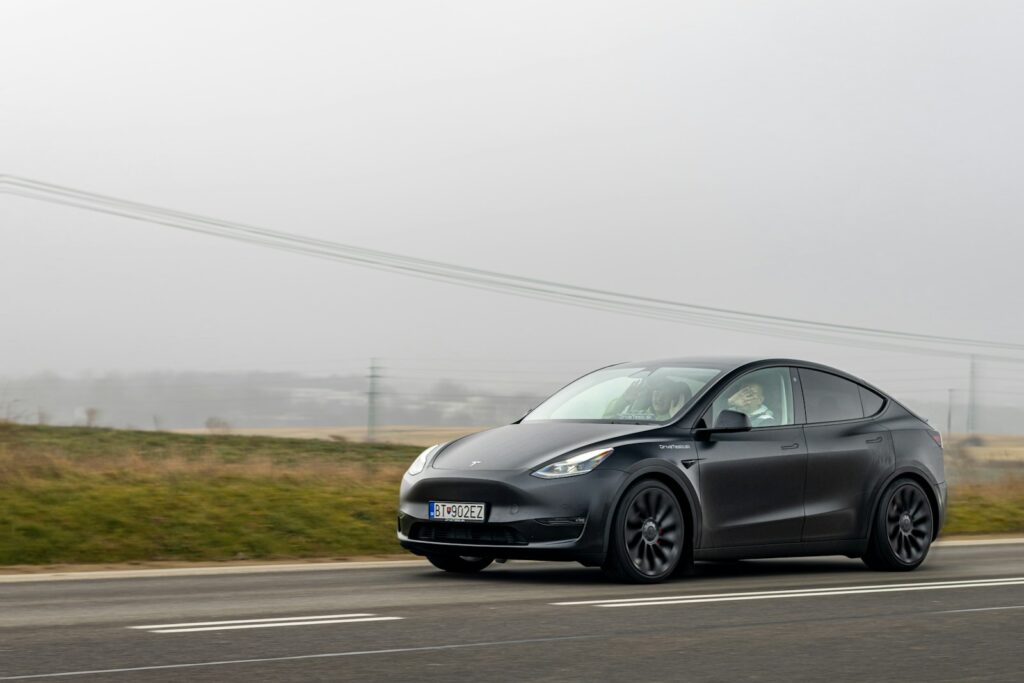
Tesla Model Y 2026
Complete Review – Pricing, Specifications & Performance Analysis
Model Year: 2026 | Currency: U.S. Dollars | Review Date: January 26, 2026 | Category: Premium Electric Crossover
2026 Tesla Model Y – Complete Overview
The 2026 Tesla Model Y represents the world’s best-selling electric vehicle, combining established brand reputation, extensive Supercharger network, outstanding efficiency, and advanced performance capabilities. However, 2026 brings a significant competitive disadvantage: Tesla Model Y lost federal tax credit eligibility, while competitors Kia EV6 and Hyundai Ioniq 5 remain eligible for $7,500 incentives. This pricing shift fundamentally changes Model Y’s value proposition despite its technical strengths.
Critical Market Reality – Tax Credit Loss Impact
⚠️ MAJOR DISADVANTAGE: Tesla Model Y is NO LONGER eligible for the $7,500 federal tax credit as of January 2026. This fundamentally reshapes pricing competitiveness. A $48,990 Premium AWD Model Y costs $48,990 net vs. competitor EV6 at $53,100 MSRP but only $45,600 net after $7,500 credit. Model Y effectively costs $3,390 MORE after incentives despite lower MSRP.
Key Highlights at a Glance
Extensive Supercharger Network: Vast global infrastructure (50,000+ stations) enables convenient long-distance travel—unmatched advantage vs. competitors.
Outstanding Efficiency: 134 MPGe combined EPA rating (Premium RWD)—best-in-class efficiency enables exceptional range on smaller battery.
Strong Performance: 3.5-4.6 second 0-60 across lineup—competes with sports cars while offering practical crossover design.
Quick Supercharging: 250 kW max charging with V4 Superchargers enables 11-60% in 17 minutes (optimal conditions).
Advanced Technology: Full Self-Driving (Supervised) capability enables traffic light detection, automatic lane changes, and autonomous navigation (though now $10,000+ cost).
World-Class Brand: Established market leader with proven reliability, extensive owner network, and strong resale values.
Market Position & Reality Check
| Factor | Model Y Advantage | Competitive Disadvantage |
|---|---|---|
| Price (MSRP) | Premium AWD $48,990 | No federal credit (EV6 eligible +$7,500) |
| Charging Network | Vast global Supercharger ecosystem | EV6 charges faster on DCFC |
| Efficiency | 134 MPGe (best-in-class) | EV6 only 131 MPGe |
| Range | 327 mi EPA (Premium RWD) | Tesla advantage limited by battery size |
| Performance | 3.5 sec 0-60 (Performance variant) | EV6 GT also 4.3 sec, superior handling |
| Autonomy Tech | Full Self-Driving advanced capabilities | FSD costs $10,000+ (was problematic) |
Who Should Consider the 2026 Model Y?
✓ Ideal For
- Supercharger network dependent drivers
- Long-distance travel enthusiasts
- Performance-seeking buyers
- Existing Tesla ecosystem users
- Tech-forward early adopters
- High-mileage annual drivers
✗ Less Ideal For
- Tax credit seekers (lost eligibility)
- Budget-conscious buyers
- V2L technology needs (not available)
- Interior design innovation seekers
- Drivers wanting innovative features
- Minimalist button preference (screen-only)
2026 Tesla Model Y Pricing & Trim Levels
The 2026 Tesla Model Y features four primary trims: Standard RWD, Premium RWD, Premium AWD, and Performance AWD, plus a limited-availability Launch Series variant. Pricing has increased compared to previous years, and the loss of federal tax credit eligibility significantly impacts competitive positioning despite lower MSRP relative to competitors.
Complete Trim Breakdown & Pricing
Battery: Smaller capacity standard pack (exact kWh not disclosed)
0-60 mph: Approximately 7.0 seconds
Range (EPA est.): ~321 miles (estimated)
Standard Features: 15.4″ touchscreen, basic autopilot features, single-motor efficiency
Interior: Standard materials (no ventilated seats, no rear heat)
Best For: Budget-conscious buyers prioritizing lowest entry price
Critical Note: NO federal tax credit—this matters significantly
Battery & Range: Long Range pack, 327 miles EPA—excellent range performance
Charging: Same 11.5 kW onboard charger; Supercharger capable
Performance: 0-60 mph in approximately 4.6 seconds—quick acceleration
Premium Features: 16″ touchscreen (vs. 15.4″ Standard), enhanced interior materials
Efficiency: 134 MPGe combined EPA rating—best-in-class
Best For: Value-conscious buyers seeking range and efficiency without AWD complexity
Sweet Spot: 327 miles of EPA range at $44,990 MSRP—exceptional efficiency value
Battery & Range: Long Range pack, 303 miles EPA (modest reduction from RWD)
Performance: 0-60 mph in approximately 4.6 seconds—same as Premium RWD
Charging: Same 11.5 kW onboard charger capability
Winter Features: AWD traction advantage, better snow/ice performance
Interior: 16″ touchscreen, 8″ rear touchscreen (Premium+), enhanced materials
Efficiency: Dual motors reduce overall efficiency slightly (134 vs. ~130 MPGe)
Best For: Snow-belt drivers, year-round all-weather capability seekers
Value Assessment: Only $4,000 more than Premium RWD—reasonable AWD upgrade cost
Performance: 0-60 mph in approximately 3.5 seconds—superb acceleration
Range: ~319 miles EPA (performance tuning reduces efficiency)
Chassis: Performance-tuned suspension, upgraded brakes
Wheels: 21″ performance wheels standard
Interior: 16″ touchscreen, full feature package
Design: Lowered suspension, sportier styling
Best For: Performance enthusiasts wanting sports car acceleration
Key Specification: 3.5-second 0-60 puts Model Y Performance in supercar acceleration territory
Powertrain: Dual motor AWD, enhanced capabilities
Range: ~320 miles EPA
Performance: 4.1 sec 0-60 (slightly quicker than standard Long Range)
Features: Full premium package with all technology options
Best For: Early adopters wanting special limited-edition variant
Availability Note: May be difficult to source (limited production)
Real-World Pricing Impact Analysis
Premium AWD Model Y vs. EV6 Standard AWD – Net Cost Comparison:
Detailed Technical Specifications
Powertrain & Performance Specifications
| Specification | Standard RWD | Premium RWD | Premium AWD | Performance AWD |
|---|---|---|---|---|
| Motor Configuration | Single Rear | Single Rear | Dual (Front+Rear) | Dual (Front+Rear) |
| Total Horsepower | 300 HP | 300+ HP | 397 HP | 534 HP |
| Torque | ~350 lb-ft | ~350 lb-ft | 389 lb-ft | 500+ lb-ft |
| 0-60 mph Time | ~7.0 seconds | ~4.6 seconds | ~4.6 seconds | ~3.5 seconds |
| Top Speed | 125 mph | 125 mph | 125 mph | 155 mph |
| EPA Range | ~321 mi | 327 mi | 303 mi | 319 mi |
Battery & Charging Specifications
| Battery Technology | Lithium-ion (LFP + NCA cells); active thermal management |
| Battery Capacity Range | Standard: ~62.5 kWh usable | Premium/Performance: ~81-84 kWh usable |
| DC Fast Charging (Supercharger) | 250 kW maximum charging rate (V4 Superchargers) |
| 11-60% on V4 Supercharger | ~17 minutes (optimal conditions with preconditioning) |
| 10-80% Charging Time | ~25-30 minutes (typical Supercharger session) |
| AC Home Charging (240V / 11.5 kW) | ~9-11 hours full charge (standard battery varies) |
| Battery Warranty | 8 years / 120,000 miles (modest vs. competitors’ 10-year warranties) |
Efficiency & Range Specifications
| EPA Efficiency (Standard RWD) | ~119 MPGe (respectable single-motor efficiency) |
| EPA Efficiency (Premium RWD) | 134 MPGe combined—best-in-class efficiency |
| EPA Efficiency (Premium AWD) | ~130 MPGe (slightly reduced by dual motors) |
| EPA Efficiency (Performance AWD) | ~120 MPGe (performance tuning reduces efficiency) |
| EPA Range (Standard RWD) | ~321 miles (base model respectable range) |
| EPA Range (Premium RWD) | 327 miles—excellent range on smaller battery |
| EPA Range (Premium AWD) | 303 miles (dual motors cost ~24 miles range) |
| EPA Range (Performance AWD) | 319 miles (performance variant maintains decent range) |
Design, Interior & Technology Experience
2026 Exterior Refresh Design
Interior Design & Material Quality – 2026 Updates
Standard/Premium Base Features
- Minimalist dashboard design philosophy
- 15.4-16″ central touchscreen (controls all functions)
- Soft-touch dashboard materials
- Vegan leather or premium cloth seating
- Substantial storage compartments
- Flat floor (EV platform benefit)
- Panoramic glass roof (Plaid on lower trims)
Premium+ Interior Enhancements
- Aluminum accents on center console, door trim, steering wheel
- Enhanced sound deadening materials
- Ventilated front seats (Premium RWD+)
- 8″ rear-seat touchscreen for climate/entertainment
- Heated rear seats (Premium variants)
- Premium Harman Kardon audio available
- Electronic folding rear seats (Premium variants)
Central Touchscreen – The Command Center
Interface Approach: Clean, modern design with large icons and logical menu structure. Responsiveness is excellent—no lag reported in testing. The interface prioritizes simplicity, though dense menu navigation is required for deep settings access.
Trade-offs: The minimalist approach creates an uncluttered, futuristic cabin aesthetic. However, some drivers prefer traditional controls for climate/audio (especially during driving when touchscreen interaction requires attention diversion).
Seating Comfort & Ergonomics
| Front Seat Design | Power-adjustable (10-way on Premium), heated standard on all models |
| Front Seat Ventilation | Available on Premium RWD and higher (new for 2026) |
| Rear Seat Space | Bench configuration; 36.8″ legroom (excellent for crossover class) |
| Rear Seat Comfort | Heated seats on Premium+; electronic fold-flat operation (new feature) |
| Headroom (Front) | 39.4 inches (excellent clearance) |
| Headroom (Rear) | 38.9 inches (spacious for second row) |
| Panoramic Glass Roof | Standard on most variants; new glass reflects 7x more solar energy (improved cooling) |
Interior Innovations & Practical Features
2026 Interior Refinements: Tesla has enhanced Model Y’s interior with premium material treatments previously seen on Model 3. Aluminum accents now adorn the center console, door trims, and steering wheel. Sound deadening has been substantially improved, creating a quieter cabin. The new roof glass with enhanced solar reflectivity keeps the cabin cooler, reducing HVAC load.
Electronic Seat Folding: A new feature for 2026—rear seats now electronically fold flat (powered seat motors), replacing manual latches. This enhances usability and implies willingness to add cost for user-facing convenience improvements.
Storage Optimization: Generous storage includes large center console, door pockets, and hidden compartments. Flat EV floor maximizes usable interior space compared to traditional platforms.
Real-World Performance & Range Analysis
Acceleration & Performance Hierarchy
Real-World Range Testing
| Driving Scenario | Standard RWD (321 mi) | Premium RWD (327 mi) | Premium AWD (303 mi) | Performance (319 mi) |
|---|---|---|---|---|
| 55 mph Mixed Driving | ~305 mi | ~315 mi | ~290 mi | ~305 mi |
| 70 mph Highway (AC) | ~240 mi | ~260 mi | ~235 mi | ~250 mi |
| Cold Weather (-10°F) | ~220 mi (31% penalty) | ~225 mi (31% penalty) | ~210 mi (31% penalty) | ~220 mi (31% penalty) |
| Hot Weather (105°F, AC) | ~288 mi (10% penalty) | ~294 mi (10% penalty) | ~273 mi (10% penalty) | ~287 mi (10% penalty) |
Supercharging Performance Analysis
Network Advantage Remains Strongest Asset: Tesla’s Supercharger network (50,000+ stations globally) represents Model Y’s greatest competitive strength. While individual charging speeds aren’t fastest compared to DCFC networks, the ecosystem integration—route optimization, charger availability, payment simplicity, in-vehicle navigation—creates superior road-trip experience.
Real-World Charging Scenarios:
- V4 Supercharger (250 kW): 11-60% in 17 minutes (optimal with preconditioning)
- Standard Supercharger: 10-80% in 25-30 minutes (typical road-trip charge)
- Public CCS Network (150 kW): ~30-40 minutes 10-80%
- Home Charging (240V, 11.5 kW): ~9-11 hours full charge
Practical Impact: Model Y’s network advantage enables frequent long-distance travel without anxiety. Supercharger density in most US regions means 20-30 minute charging stops are sufficient for 200+ additional miles of range.
Efficiency Benchmarking – Best-in-Class
EPA Efficiency Leadership:
- Premium RWD: 134 MPGe combined — best-in-class efficiency for crossover segment
- This efficiency enables 327-mile range on a smaller battery than competitors
- Tesla achieves this through optimized powertrain, lightweight design, and thermal management
Competitive Context:
Driving Dynamics & Handling
Steering & Responsiveness: Electric power steering calibrated for responsive feedback (not overly numb). Quick turn-in response provides engaging handling for a crossover. Some drivers prefer this responsive tuning; others find it slightly aggressive for daily driving.
Suspension Compliance: Tesla tunes suspension for balanced comfort + control. Performance variant features stiffer tuning for spirited driving. Premium variants ride smooth without wallowing on imperfections.
Regenerative Braking: Strong regen is adjustable via three driving modes. One-pedal driving proficiency achievable with practice. Smooth deceleration feel, though learning curve exists initially.
Overall Dynamics Assessment: Model Y demonstrates class-competitive handling for a crossover. Responsive steering and balanced suspension create engaging driving experience. Performance variant genuinely entertaining for driver engagement.
Technology, Autonomy & Full Self-Driving
Autopilot & Full Self-Driving – 2026 Update
⚠️ MAJOR CHANGE – January 2026: Tesla has removed Basic Autopilot from standard equipment. New 2026 Model Y buyers must subscribe to Full Self-Driving (Supervised) at $99/month or $10,000 one-time purchase to access lane-keeping assist and traffic-aware cruise control that were previously free.
Autopilot & FSD Feature Breakdown
| Feature | Basic (Now Paid) | Full Self-Driving (Supervised) |
|---|---|---|
| Traffic-Aware Cruise Control | ✓ $99/mo or $10,000 | ✓ Included in FSD |
| Autosteer (Lane Keeping) | ✓ $99/mo or $10,000 | ✓ Enhanced with FSD |
| Automatic Lane Changes | ✗ Not available | ✓ FSD feature |
| Navigate on Autopilot | ✗ Not available | ✓ Route-following feature |
| Traffic Light & Stop Sign Control | ✗ Not available | ✓ Can recognize + respond |
| Automatic Parking | ✗ Not available | ✓ Summon feature available |
| Cost (2026) | $99/month or historically free | $99/month or $10,000 one-time |
Full Self-Driving (Supervised) – Advanced Autonomy
Key Features:
- Traffic Light & Stop Sign Recognition: Vehicle can identify traffic signals, slow to stops, and resume movement (with driver confirmation) at many intersections
- Automatic Lane Changes: Vehicle automatically moves between lanes when appropriate (can be controlled by driver preference)
- Navigate on Autopilot: Suggests lane changes and route navigation autonomously
- Smart Summon: Vehicle can navigate parking lots and come to driver (limited scenarios)
- Enhanced Sensing: 8-camera system with neural network processing (camera-only, no LIDAR)
Infotainment & Connectivity
| Central Display Size | 15.4″ (Standard) or 16″ (Premium/Performance) |
| Rear Passenger Display | 8″ touchscreen (Premium variants) for climate/entertainment |
| Apple CarPlay/Android Auto | ✗ Not available (Tesla proprietary ecosystem only) |
| Navigation System | Built-in navigation with Supercharger integration |
| OTA Updates | ✓ Automatic over-the-air software updates |
| Tesla App Integration | ✓ Control climate, check battery, locate vehicle remotely |
| Gaming & Entertainment | ✓ Built-in games, streaming apps, music services |
Driver Assistance Systems
Standard ADAS (All Models)
- Automatic emergency braking
- Forward collision warning
- Blind-spot monitoring
- Rear-view cameras
- Lane departure warning
- Cross-traffic alert
Premium Safety Features
- 360-degree camera system
- Blind-spot visualization
- Road-aware cruise control
- Traffic light recognition
- Obstacle detection (FSD)
- Sentry Mode (security recording)
Camera-Based Vision System (No LIDAR)
Tesla Vision Approach: Model Y uses 8 cameras + neural network processing (no LIDAR, no radar) for autonomous features. This camera-only approach reduces cost compared to competitors using multiple sensor types, but some argue it’s less robust than sensor fusion approaches.
Advantages: Simpler architecture, faster processing, continuous improvement via software updates. Camera-based systems are proven effective in diverse conditions.
Trade-offs: Potential limitations in adverse weather (heavy rain/snow), poor lighting conditions. Tesla maintains this architecture is superior; traditional autonomous driving advocates (Waymo) prefer sensor fusion.
Detailed Competitor Comparison Analysis
Tesla Model Y Premium AWD vs. Kia EV6 Standard AWD – Direct Battle
| Specification | Model Y Premium AWD | Kia EV6 Std AWD | Winner |
|---|---|---|---|
| Base MSRP | $48,990 | $53,100 | ✓ Model Y ($4,110 cheaper) |
| Federal Tax Credit | $0 (NOT ELIGIBLE) | $7,500 eligible | ✓ EV6 (significant advantage) |
| Net Cost After Incentives | $48,990 | $45,600 | ✓ EV6 ($3,390 cheaper net) |
| EPA Range | 303 miles | 298 miles | ✓ Model Y (5 mi better) |
| 0-60 mph | 4.6 seconds | 5.8 seconds | ✓ Model Y (1.2 sec quicker) |
| EPA Efficiency | 130 MPGe | 131 MPGe | EV6 (essentially equivalent) |
| DC Fast Charging | 10-80% ~25-30 min | 10-80% ~10-18 min | ✓ EV6 (2x faster) |
| Charging Network | Extensive Supercharger network | Growing public CCS network | ✓ Model Y (far larger) |
| Advanced Autonomy | FSD available ($10,000+) | Standard ADAS only | ✓ Model Y (more advanced) |
| Interior Innovation | Minimalist touchscreen design | Universal Island console (movable) | ✓ EV6 (more innovative) |
| V2L Technology | ✗ Not available | ✓ Power export available | ✓ EV6 |
| Design Philosophy | Minimalist, tech-forward | Bold, futuristic, design-focused | Subjective preference |
Tesla Model Y vs. Hyundai Ioniq 5 AWD – Efficiency vs. Design
| Base Price | Model Y $48,990 vs. Ioniq 5 ~$49,000-51,000 (roughly equivalent) |
| After Tax Credits | Model Y $48,990 (no credit) vs. Ioniq 5 $41,500-43,500 (with $7,500 credit) |
| Net Cost Advantage | ✓ Hyundai Ioniq 5 (approximately $7,500 cheaper net) |
| Range Capability | Model Y 303 mi vs. Ioniq 5 269 mi (Model Y 34 miles more) |
| Efficiency | Model Y 130 MPGe vs. Ioniq 5 98 MPGe (Model Y significantly more efficient) |
| Charging Speed | Ioniq 5 faster (~10.9 min 10-80%) vs. Model Y (~25-30 min) |
| V2L Technology | ✓ Ioniq 5 has power export; Model Y lacks V2L |
| Supercharger Access | Model Y vast network vs. Ioniq 5 public CCS infrastructure |
| Design Leadership | Model Y minimalist vs. Ioniq 5 bold contemporary (preference-based) |
| FSD Autonomy | Model Y advanced ($10,000+) vs. Ioniq 5 standard ADAS only |
Overall Competitive Assessment
Model Y Strengths vs. Competitors:
- ✓ Supercharger network dominance (50,000+ stations globally)
- ✓ Outstanding efficiency (134 MPGe Premium RWD best-in-class)
- ✓ Strong performance (3.5-4.6 sec 0-60 across lineup)
- ✓ Advanced autonomy option (FSD available)
- ✓ Brand recognition (Tesla market leadership)
- ✓ Established ecosystem (proven reliability, owner network)
Model Y Disadvantages vs. Competitors:
- ✗ NO federal tax credit eligible (major disadvantage: $7,500 disadvantage vs. EV6/Ioniq 5)
- ✗ Slower DC charging (25-30 min vs. EV6‘s 10-18 min)
- ✗ No V2L technology (Ioniq 5 can power external devices)
- ✗ Autopilot now paid feature (removed from standard equipment)
- ✗ Less interior innovation (vs. EV6‘s Universal Island console)
- ✗ Touchscreen-only controls (some drivers prefer physical buttons)
- ✗ Higher net cost after tax credits despite lower MSRP
Final Verdict & Comprehensive Recommendation
Overall Rating & Assessment
Executive Summary
The 2026 Tesla Model Y remains a formidable electric crossover, combining world-class efficiency, established brand strength, extensive Supercharger infrastructure, and available advanced autonomy features. However, the loss of federal tax credit eligibility fundamentally alters its competitive positioning. The Model Y’s $48,990-$57,490 pricing advantage over competitors evaporates after incentives—the EV6 ultimately costs $3,390 less after tax credits despite higher MSRP, and Ioniq 5 costs $7,500 less. This pricing shift, combined with slower charging speeds and removal of basic autopilot from standard equipment, creates a compelling case for competitors despite Model Y’s technical strengths.
Detailed Pros & Cons Assessment
Major Strengths
- Supercharger network vastly larger than competitors
- Best-in-class efficiency (134 MPGe)
- Strong performance across lineup (3.5-4.6 sec 0-60)
- Proven reliability and established brand
- Advanced FSD autonomy available
- Excellent range on smaller battery
- Updated interior materials and refinement
- Large owner community and support network
- Strong resale values (established market)
- Premium driving experience
Critical Limitations
- NO federal tax credit (major $7,500 disadvantage)
- Higher net cost than EV6/Ioniq 5 after incentives
- Slower charging than EV6 (25-30 min vs. 10-18 min)
- Basic autopilot now requires $10,000+ investment
- No V2L power export capability
- Limited interior innovation vs. EV6
- Touchscreen-only controls (no physical buttons)
- Minimalist design lacks some creature comforts
- FSD additional cost adds significant expense
- Camera-only autonomy (no sensor fusion)
Buyer Profile Assessment
Ideal Model Y Buyers
- Long-distance frequent travelers
- Supercharger network dependent drivers
- Performance enthusiasts
- Tesla ecosystem users
- High-annual-mileage drivers
- Tech-forward early adopters
- Buyers who value brand prestige
Consider EV6/Ioniq 5 Instead If…
- Tax credit savings critical (very important)
- Faster charging desired
- Interior innovation valued
- V2L power export needed
- Lower net cost priority
- Minimalist controls concern
- Budget-conscious positioning
Final Recommendation
VERDICT: Recommended for Right Buyer (8.4/10)
The 2026 Tesla Model Y remains a strong choice, but with significant caveats:
Model Y delivers genuine technical excellence—outstanding efficiency (134 MPGe), strong performance (3.5-4.6 sec 0-60), extensive Supercharger network, and available advanced autonomy. For buyers prioritizing Supercharger infrastructure access and long-distance capabilities, Model Y’s established ecosystem provides genuine value.
However, the tax credit loss fundamentally reshapes value equation: At $48,990 MSRP without federal credit eligibility, Model Y costs $3,390 MORE net than EV6 ($45,600 after $7,500 credit) despite lower MSRP. Ioniq 5 costs $7,500 less net. This pricing reversal is significant.
Recommendation Framework:
- Choose Model Y if: You frequently travel long distances, rely on Supercharger network extensively, prioritize FSD autonomy capabilities, or value Tesla brand/ecosystem
- Choose EV6 if: You want better value after tax credits, prefer faster charging, desire interior innovation (Universal Island console), or need V2L technology
- Choose Ioniq 5 if: Budget is critical priority, want fastest charging speeds, or prefer value-focused positioning
Bottom Line: The 2026 Model Y is an excellent electric crossover that loses its primary competitive advantage—federal tax credit eligibility. It’s the right choice for Supercharger-dependent drivers and performance seekers, but EV6/Ioniq 5 now offer better overall value for typical buyers. The rating reflects strong technical execution (8.5/10 capability) offset by competitive disadvantage (tax credit loss -1.0/10) = 8.4/10 overall.
Real-World Ownership Costs (5-Year)
| Net Purchase Price (Premium AWD) | $48,990 (no tax credit) |
| Annual Electricity Cost (12,000 mi/year) | ~$400-450 (superb efficiency) |
| Annual Insurance | ~$1,400-1,800 (premium crossover rates) |
| Annual Maintenance | ~$150-200 (EVs minimal maintenance) |
| FSD Cost (if purchased) | $10,000 one-time or $99/month |
| 5-Year Total Cost of Ownership | ~$64,000-75,000 (with or without FSD) |
| Competitive vs. EV6 | Approximately $2,400-3,900 MORE expensive over 5 years |
