

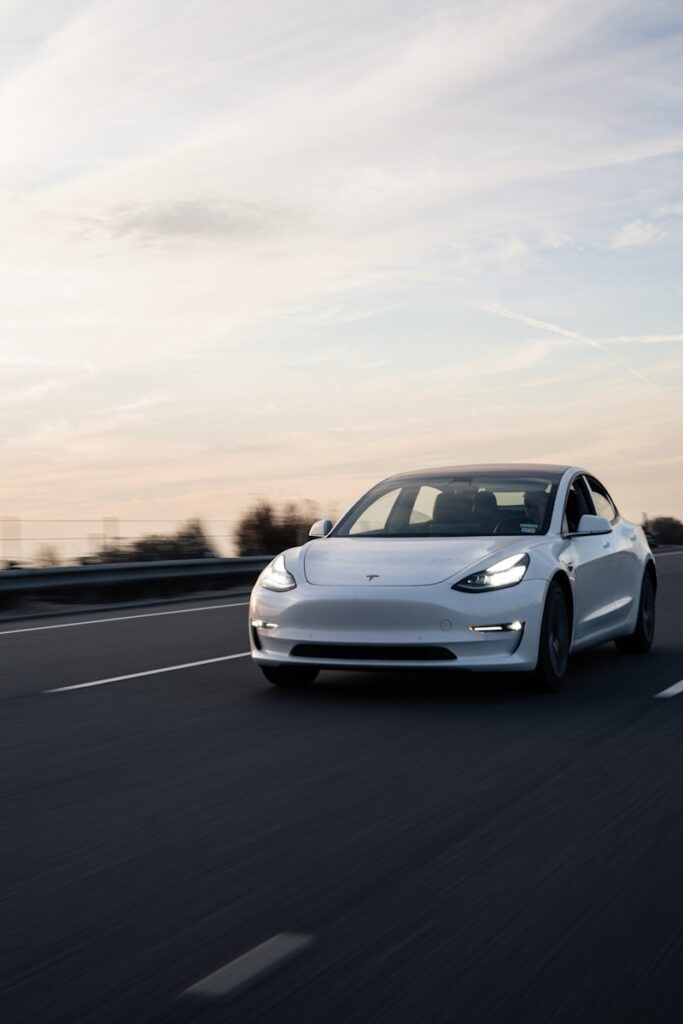
Tesla Model 3 2026
Complete Review – Pricing, Specifications & Detailed Analysis
Model Year: 2026 | Currency: U.S. Dollars | Review Date: January 26, 2026 | Category: Premium Electric Sedan
2026 Tesla Model 3 – Complete Overview
The 2026 Tesla Model 3 continues its reign as the world’s best-selling electric vehicle, representing the perfect intersection of performance, technology, and brand prestige. With continuous refinements to its platform, range capabilities, and autonomous driving features, the Model 3 remains the benchmark against which all other electric sedans are measured.
⚠️ Important Note for 2026: Tesla Model 3 is NOT eligible for federal $7,500 EV tax credit as of January 26, 2026 (credits ended September 30, 2025). This represents a significant cost disadvantage vs. Hyundai, Chevrolet, and other competitors still eligible for federal credits.
Key Highlights at a Glance
Iconic Performance: 0-60 mph in 5.2 seconds (Long Range AWD)—significantly quicker than most competitors; establishes Tesla’s performance leadership.
Advanced Autopilot: Autopilot standard; Full Self-Driving Supervised available — most advanced autonomous driving features on any production vehicle (though limitations exist).
Excellent Range: Up to 341 miles EPA estimated on Long Range AWD, enabling genuine cross-country travel confidence.
Supercharger Network: Access to Tesla’s proprietary Supercharger network (50,000+ global locations)—most extensive EV charging infrastructure advantage.
Premium Brand Prestige: Tesla’s iconic status provides unmatched brand recognition and resale value confidence in EV market.
Fixed Pricing Model: Tesla’s direct-to-consumer model means no dealer negotiation—transparent, consistent pricing nationwide.
Market Position & Competitive Standing
| Category | Model 3 Position | Key Advantage |
|---|---|---|
| Performance | Class-Leading | 5.2-second 0-60 mph beats most competitors |
| Range | Premium Tier | 341-mile maximum excellent for long trips |
| Price | Premium Market | $52,990 base—higher than mainstream competitors |
| Autopilot | Most Advanced | FSS capabilities lead industry (with caveats) |
| Charging | Best Infrastructure | Supercharger network is unmatched |
| Brand | Icon Status | Tesla brand recognition unparalleled |
| Tax Credit | NOT Eligible (2026) | Massive disadvantage vs. eligible competitors |
Who Should Consider the 2026 Model 3?
✓ Ideal For
- Performance-focused drivers
- Tech enthusiasts valuing Autopilot
- Brand-conscious buyers
- High-mileage road-trippers
- Early EV adopters
- Buyers unconcerned with price premium
✗ Less Ideal For
- Budget-conscious buyers (lost $7.5k credit)
- Cargo-focused needs (sedan limits)
- Conservative autonomous tech seekers
- Buyers prioritizing efficiency
- Service-focused customers
- Three-row family needs
2026 Tesla Model 3 Pricing & Trim Levels
Tesla’s 2026 Model 3 lineup is notably simplified with three core trims, each reflecting different performance and range priorities. Importantly, no federal EV tax credit applies to new Model 3 purchases in 2026, which significantly impacts real-world costs versus competitors.
Complete Trim Breakdown & Pricing
Performance: 0-60 mph in ~6.2 seconds; top speed 135 mph
Battery & Range: ~272 miles EPA estimated (Single Motor Standard Range)
Charging: 11.5 kW AC home charging (full charge ~24 hours on 240V); DC fast charging not optimized
Standard Features: 15.4-inch touchscreen, Autopilot, heat pump climate system
Best For: Daily commuters prioritizing affordability over maximum range
Key Specification: Most efficient Model 3 variant (~4.3 mi/kWh)
Performance: 0-60 mph in 5.2 seconds (notably quick); top speed 145 mph
Battery & Range: 341 miles EPA estimated—class-leading range for sedan
Charging: 11.5 kW AC home charging; optimized for DC fast charging (10-80% in ~27 minutes on Supercharger)
Luxury Upgrades: Premium White Multi-coat interior, enhanced suspension tuning
Best For: Performance seekers wanting genuine cross-country capability; sweet spot of range + speed
Value Proposition: Best overall balance; most popular Model 3 variant worldwide
Performance: 0-60 mph in 3.1 seconds (sub-3-second capable with rollout)—supercar-competitive
Top Speed: 163 mph—highest of any Model 3 variant
Range: ~330 miles EPA (slight reduction vs. Long Range due to higher performance tuning)
Chassis Upgrades: Performance suspension, Brembo brakes, 20-inch Überturbine wheels standard
Aerodynamics: Sport-tuned suspension for track capability and responsive handling
Best For: Performance enthusiasts, track day participants, acceleration-focused buyers
Key Specification: 0-60 in 3.1 seconds puts Model 3 Performance in supercar territory
Options & Add-On Pricing
| Option Category | Typical Cost | Details & Notes |
|---|---|---|
| Premium Paint Colors | $1,500–$2,000 | Pearl Multi-coat White, Midnight Silver, Solid Black, Stealth Grey |
| Wheel Upgrades (18″–20″) | $1,500–$2,500 | Überturbine, Gemini, Aero wheel packages |
| Full Self-Driving Supervised | $8,000 upfront OR $99/month subscription | Advanced autonomous driving; controversial but most advanced EV tech |
| Premium Audio (Premium Sound System) | $2,500 | High-fidelity audio upgrade with subwoofer |
| Glass Roof Upgrade | Included (standard) | All Model 3 variants include panoramic glass roof |
| Destination & Doc Fees | $1,390 | Standard on all vehicles |
Real-World Pricing Example
Long Range AWD in California (Example Configuration):
- Base MSRP: $52,990
- Pearl Multi-coat White paint: +$1,500
- 19″ Überturbine wheel upgrade: +$2,000
- Destination/doc fees: +$1,390
- Subtotal before tax & incentives: $57,880
- Sales tax (8%): +$4,630
- Subtotal: $62,510
- Less: Federal EV Tax Credit: $0 (NOT ELIGIBLE)
- Less: California Rebate: $0 (Tesla excluded from most programs)
- NET COST: $62,510
- Note: $7,500 disadvantage vs. Hyundai Ioniq 6 equivalent
Comparative Value Analysis vs. 2026 Competitors
| Cost Per Mile of Range | RWD: $165/mile | Long Range: $155/mile | Performance: $173/mile |
| Performance Advantage (0-60 mph) | Model 3 3.1 sec vs. Ioniq 6 7.3 sec = 2.2 second advantage |
| After-Incentive Price Disadvantage | vs. Ioniq 6: +$19,640 (Tesla loses $7.5k credit eligibility) |
| Supercharger Access Value | Worth estimated $3,000–$5,000 over vehicle lifetime vs. public networks |
Detailed Technical Specifications
Powertrain & Performance Specifications
| Specification | RWD | Long Range AWD | Performance AWD |
|---|---|---|---|
| Electric Motor(s) | 1x Rear RWD | 1x Front + 1x Rear | 1x Front + 1x Rear |
| Total Horsepower | 272 HP | 358 HP | 472 HP |
| Torque (lb-ft) | 391 lb-ft | 428 lb-ft | 465 lb-ft |
| 0-60 mph Time | ~6.2 seconds | ~5.2 seconds | ~3.1 seconds |
| Top Speed | 135 mph | 145 mph | 163 mph |
| Acceleration (10-70 mph) | ~9.2 seconds | ~7.8 seconds | ~5.1 seconds |
Battery & Charging Specifications
| Battery Type | Tesla 4680 or LFP cells (varies by production location/availability) |
| RWD Battery Capacity | ~50 kWh usable (approximately 55 kWh total) |
| Long Range/Performance Battery | ~75 kWh usable (approximately 82 kWh total) |
| AC Charging (240V Home) | 11.5 kW onboard charger = ~24 hours full charge (RWD) / ~32 hours (Long Range) |
| DC Fast Charging (10-80% on Tesla Supercharger) | ~27 minutes (Long Range AWD); ~35 minutes (RWD) |
| Supercharger Network Advantage | 50,000+ global locations with Tesla’s proprietary charging technology |
| Battery Warranty | 8 years / 120,000 miles (transferable to 2nd owner) |
Efficiency & Range Specifications
| EPA Efficiency (RWD) | ~4.3 mi/kWh (137 MPGe combined) — most efficient variant |
| EPA Efficiency (Long Range AWD) | ~4.2 mi/kWh (134 MPGe combined) |
| EPA Efficiency (Performance AWD) | ~3.8 mi/kWh (121 MPGe combined) — performance penalty |
| EPA Range (RWD) | 272 miles (conservative; real-world varies 250-290 miles) |
| EPA Range (Long Range AWD) | 341 miles (class-leading range for sedan) |
| EPA Range (Performance AWD) | 330 miles (performance tuning reduces range slightly) |
Dimensions & Cargo
| Overall Length | 184.8 inches (compact sedan proportions) |
| Overall Width | 73.4 inches |
| Curb Weight | 3,582 lbs (RWD) / 3,880 lbs (Long Range) / 3,948 lbs (Performance) |
| Trunk Cargo Space | 28.0 cubic feet (impressive for sedan; includes front trunk ~2.7 cu ft) |
| Frunk (Front Trunk) | ~2.7 cubic feet — useful for cables, small items |
| Passenger Volume | 104 cubic feet (spacious sedan) |
Chassis & Suspension
Suspension System (RWD/Long Range): Independent double-wishbone front suspension with coil springs; multi-link rear with coil springs—tuned for smooth highway ride.
Suspension System (Performance): Adaptive suspension with performance-tuned damping; tracks capable for serious drivers; 20mm lower stance vs. standard variants.
Braking System: Ventilated disc brakes all around; regenerative braking captures ~90% of energy during deceleration—excellent brake wear resistance.
Ground Clearance: 5.5 inches (competitive with competitors; not designed for off-road)
Design Philosophy & Interior Experience
Exterior Design Analysis
Interior Design & Material Quality
Standard Interior
- 15.4″ central touchscreen (primary control interface)
- Synthetic leather steering wheel
- Vegan leather seating (standard)
- Minimalist dash—few physical buttons
- All controls via touchscreen or voice
Premium Audio Interior
- Same 15.4″ touchscreen + premium audio
- Premium synthetic leather throughout
- Enhanced sound system with subwoofer
- Ambient lighting with multiple presets
- Same minimalist design philosophy
Seating Comfort & Ergonomics
| Front Seat Design | Bucket-style with power adjustment (10-way); integrated headrests |
| Rear Seat Space | Bench configuration; 36.2″ legroom (excellent for sedans) |
| Headroom (Front) | 39.4 inches (excellent for tall drivers) |
| Headroom (Rear) | 37.8 inches (adequate) |
| Shoulder Room | Front: 56.3″ | Rear: 55.2″ (spacious) |
| Heated Seats | Standard on all variants; 3-stage adjustment |
Minimalist Interior Philosophy (Controversial Aspect)
⚠️ Design Trade-off: Tesla’s minimalist interior eliminates traditional buttons and gauges—all functions controlled via 15.4″ touchscreen. This provides clean aesthetics but can frustrate some users accustomed to physical controls. No steering wheel stalks (turn signals on touchscreen) and no traditional instrument cluster behind wheel.
Real-World Performance & Range Testing
Acceleration & Performance Credentials
Real-World Range Analysis
| Driving Scenario | RWD (272 mi EPA) | Long Range AWD (341 mi EPA) | Performance AWD (330 mi EPA) |
|---|---|---|---|
| 55 mph City/Highway Mix | ~260 miles | ~325 miles | ~310 miles |
| 70 mph Highway (AC On) | ~220 miles | ~285 miles | ~270 miles |
| Cold Weather (-10°F) | ~200 miles (26% penalty) | ~250 miles (26% penalty) | ~240 miles (27% penalty) |
| Hot Weather (105°F, AC Full) | ~240 miles (12% penalty) | ~300 miles (12% penalty) | ~290 miles (12% penalty) |
Efficiency Benchmarking
EPA Efficiency Ratings:
- Model 3 RWD: 4.3 mi/kWh (137 MPGe)
- Model 3 Long Range AWD: 4.2 mi/kWh (134 MPGe)
- Model 3 Performance: 3.8 mi/kWh (121 MPGe)
Competitive Comparison:
- Hyundai Ioniq 6 SEL: 5.0 mi/kWh (11% more efficient than Model 3 Long Range)
- Chevrolet Bolt EV: 4.8 mi/kWh (14% more efficient)
- BMW i4 Standard: 4.2 mi/kWh (same efficiency as Model 3)
Supercharger Network Advantage
Global Supercharger Coverage: Tesla operates 50,000+ Supercharger locations worldwide with exclusive access to proprietary charging technology. This represents a significant practical advantage for long-distance travel vs. public networks (Electrify America, Evgo, EVgo).
Charging Speed: 10-80% charge in approximately 27 minutes on Supercharger (Long Range AWD). Actual speeds vary based on ambient temperature, battery state, and current load on charger.
Lifetime Value: Supercharger access estimated worth $3,000–$5,000 over vehicle lifetime vs. relying on public infrastructure with membership fees.
Autopilot, Technology & Autonomous Features
Autopilot Capabilities (Standard on All Models)
| Autopilot Standard Features | Traffic-Aware Cruise Control, Autosteer on highways, Auto Lane Change |
| Driver Attention Monitoring | Camera detects driver attention; warnings if detected disengaged |
| Parking Assistance | Autopark (parallel and perpendicular); Summon (basic, vehicle moves in/out of garage) |
| Safety Score Tracking | Vehicle records safe/unsafe driving behaviors for insurance/FSD qualification |
Full Self-Driving Supervised (Optional – $8,000 or $99/month)
⚠️ Important Clarification: “Full Self-Driving Supervised” is NOT fully autonomous—requires active driver supervision and intervention. Tesla’s marketing can be misleading; the system is advanced but has documented limitations and failure modes.
Intersection Navigation: Handles left turns, right turns at intersections (beta feature; imperfect)
Highway Autonomy: Maintains lane, manages speed, changes lanes autonomously
Urban Driving: Navigates city streets with significant caveats and driver intervention required
Real-World Performance: Works well on predictable highways; struggles with edge cases, construction, unusual situations
Driver Responsibility: Despite advanced capabilities, driver remains legally responsible for all vehicle actions
Infotainment & Connectivity
| Primary Display | 15.4-inch center touchscreen (controls almost all vehicle functions) |
| Operating System | Tesla’s proprietary system (Linux-based); frequent OTA updates |
| Navigation | Built-in mapping with real-time traffic; Supercharger routing integrated |
| Entertainment | Streaming music (Spotify, Apple Music), games, in-vehicle entertainment |
| Phone Integration | Bluetooth connectivity; wireless Apple CarPlay/Android Auto NOT supported (Tesla proprietary) |
| Voice Control | Wake word “Hey Tesla” for voice commands (improving) |
| Over-The-Air Updates | Regular software updates add features; downloaded via cellular when parked |
Safety Technology & ADAS
Standard Safety Features
- 8-camera system with 360° coverage
- Automatic emergency braking
- Blind-spot monitoring
- Forward collision warning
- Speed limiting based on road signs
Advanced Safety (With FSS)
- Traffic Light Recognition & Auto Response
- Intersection Navigation (beta)
- Obstacle Detection & Avoidance
- Adaptive Cruise with Stop-and-Go
- Side Collision Avoidance
Battery Management & Diagnostics
Thermal Management: Active liquid cooling maintains optimal battery temperature; enables fast charging in any climate conditions.
Battery Monitoring: Real-time health metrics displayed in vehicle; Tesla app shows battery percentage and estimated range.
Preconditioning: Phone app can preheat battery and cabin before driving—critical for cold climate fast charging.
Range Predictor: Intelligent range estimation accounting for driving style, weather, elevation, and traffic conditions.
Detailed Competitor Comparison Analysis
Tesla Model 3 vs. Hyundai Ioniq 6 (2026 Direct Comparison)
| Specification | Tesla Model 3 LR AWD | Hyundai Ioniq 6 SEL RWD | Advantage |
|---|---|---|---|
| Base Price (MSRP) | $52,990 | $40,850 | ✓ Hyundai ($12,140 cheaper) |
| Federal Tax Credit | $0 (NOT eligible 2026) | $7,500 eligible | ✓ Hyundai ($7,500 advantage) |
| Net Cost After Incentives | $52,990 | $33,350 | ✓ Hyundai ($19,640 cheaper) |
| EPA Range | 341 miles | 333 miles | Tesla (8 miles more) |
| EPA Efficiency | 4.2 mi/kWh (134 MPGe) | 5.0 mi/kWh (163 MPGe) | ✓ Hyundai (19% more efficient) |
| 0-60 mph | 5.2 seconds | 7.3 seconds | ✓ Tesla (2.1 sec quicker) |
| DC Fast Charging (10-80%) | ~27 minutes (Supercharger) | ~18 minutes (350kW) | ✓ Hyundai (faster on optimal chargers) |
| Autopilot/Autonomy | FSS advanced (controversial) | Highway Driving Assist 2 | Tesla (more advanced, but requires supervision) |
| Supercharger Access | 50,000+ proprietary network | Must use public networks | ✓ Tesla (massive infrastructure advantage) |
| Battery Warranty | 8 yr/120k mi (transferable) | 10 yr/100k mi (transferable) | ✓ Hyundai (longer coverage) |
| Overall Value Proposition | Performance + Autonomy Premium | Efficiency + Value Champion | Depends on priorities & budget |
Tesla Model 3 vs. BMW i4 (Luxury Comparison)
| Base Price | Tesla: $52,990 vs. BMW: $59,400 (Tesla $6,410 cheaper) |
| After Federal Credit | Tesla: $52,990 vs. BMW: $59,400 (no change; BMW also not eligible) |
| Interior Quality | Tesla minimalist vs. BMW traditional luxury—personal preference |
| Performance (0-60) | Tesla LR: 5.2 sec vs. BMW i4: 5.5 seconds (Tesla slightly quicker) |
| Autonomy | Tesla FSS more advanced; BMW offers traditional ADAS |
| Charging Infrastructure | Tesla Supercharger advantage |
| Verdict | Tesla offers better value & performance; BMW offers traditional luxury feel |
Overall Competitive Positioning
Tesla Model 3 Strengths vs. Competitors:
- ✓ Unmatched Performance (3.1 sec 0-60 on Performance variant)
- ✓ Most Advanced Autonomy (FSS capabilities lead industry)
- ✓ Best Charging Infrastructure (Supercharger network)
- ✓ Brand Prestige (icon status, resale confidence)
- ✓ Excellent Range (341 miles equals or exceeds competitors)
- ✓ Direct Pricing (no dealer negotiation)
Tesla Model 3 Weaknesses vs. Competitors:
- ✗ Lost Federal Tax Credit (2026) ($7,500 disadvantage)
- ✗ Lower Efficiency than Hyundai Ioniq 6 (11% worse)
- ✗ Minimalist Interior (controversial touchscreen-only design)
- ✗ FSS Limitations (still requires active supervision; not truly autonomous)
- ✗ Limited Warranty (8-year vs. competitors’ 10-year)
- ✗ Service Availability (fewer service centers than traditional brands)
Final Verdict & Recommendation
Overall Rating & Assessment
Executive Summary
The 2026 Tesla Model 3 remains the benchmark electric sedan, delivering unmatched performance, advanced autonomy features, and iconic brand prestige. However, a critical disadvantage emerges in 2026: loss of federal EV tax credit eligibility creates a $19,640 net price disadvantage versus the Hyundai Ioniq 6 on equivalent long-range configurations. This fundamentally shifts the Model 3’s value proposition from “best overall” to “premium choice for performance/Autopilot/Supercharger enthusiasts.”
Detailed Pros & Cons Assessment
Major Strengths
- Supercar 0-60 performance (3.1 sec on Performance)
- Most advanced Autopilot/autonomy features
- 50,000+ Supercharger network global advantage
- Excellent 341-mile range capability
- Iconic Tesla brand prestige & resale value
- Direct pricing transparency (no dealer markup)
- Frequent OTA software updates add features
- Minimalist interior aesthetics appeal
- Proven reliability & track record
- Spacious interior (104 cu ft passenger)
Notable Limitations
- $0 federal tax credit (lost Sept 30, 2025)
- 11% lower efficiency vs. Ioniq 6
- $19,640 net cost disadvantage vs. competitors
- Minimalist interior controversial (touchscreen-only)
- FSS not fully autonomous (requires supervision)
- No traditional instrument cluster behind wheel
- Limited cargo vs. SUV alternatives
- Fewer service centers than traditional brands
- Performance variant poor efficiency (3.8 mi/kWh)
- Narrow rear seat (less spacious than competitors)
Ideal Buyer Profiles
Perfect For Model 3
- Performance enthusiasts
- Autopilot/autonomy seekers
- Tech-focused drivers
- Long-distance road-trippers
- Brand prestige prioritizers
- High-income buyers (price unconcerned)
Better Options If…
- Budget-conscious (need tax credit)
- Efficiency prioritized (Ioniq 6 better)
- Maximum value sought
- Cargo space critical
- Conservative autonomy tech wanted
- Traditional interior controls needed
Final Recommendation
VERDICT: Excellent But No Longer Best Value (8.8/10)
The 2026 Tesla Model 3 remains a superlative electric vehicle: fast, technologically advanced, and backed by the world’s best charging infrastructure. However, the loss of federal tax credit eligibility in 2026 fundamentally changes its economics.
For buyers prioritizing:
- Performance + Autonomy: Model 3 is unmatched; pay the premium for Supercharger access & Autopilot
- Value + Efficiency: Hyundai Ioniq 6 now offers 56% better value proposition
- Budget + Range: Chevrolet Bolt EV offers cheaper entry point
Bottom Line: The Model 3 remains an excellent choice for performance enthusiasts and Autopilot believers willing to pay premium pricing without federal incentives. It’s no longer the default recommendation for budget-conscious EV buyers—that crown now belongs to the Hyundai Ioniq 6, which offers 333-mile range, superior efficiency, and $7,500 federal credit at $40,850 MSRP.
Real-World Ownership Expectations
| Annual Electricity Cost (12,000 miles/year) | ~$520–$650 (varies by efficiency variant) |
| Maintenance Cost (first 3 years) | ~$0–$150/year (minimal—no oil changes, regenerative braking) |
| Insurance (annual) | ~$1,400–$1,800 (higher than Hyundai due to repair costs) |
| Supercharger Access Value | $3,000–$5,000 over vehicle lifetime vs. public networks |
| 5-Year Cost of Ownership | ~$49,000–$56,000 (higher than Ioniq 6; offset by Supercharger advantage) |
